
If you have noticed one eyelid sitting lower than the other, or your eyes looking tired and half-closed in photos, you may be dealing with a droopy eyelid, known medically as ptosis. It can affect children and adults alike. People often assume it is purely a cosmetic concern, but a drooping upper eyelid can also creep into your line of sight and make everyday tasks, like reading, driving, or scrolling on your phone, quietly harder. The reassuring part is that with the right diagnosis, droopy eyelid treatment can restore both how your eyes look and how well they work.
What Is Ptosis?
“Ptosis” simply means the upper eyelid droops and rests lower than it should, a little like a window blind that no longer rolls all the way up. It can affect just one or both eyes (bilateral ptosis). When the droop is mild, it is mostly a matter of appearance. When it is more pronounced, the eyelid can edge over the pupil, the round opening that lets light into the eye, and begin to block part of your vision.
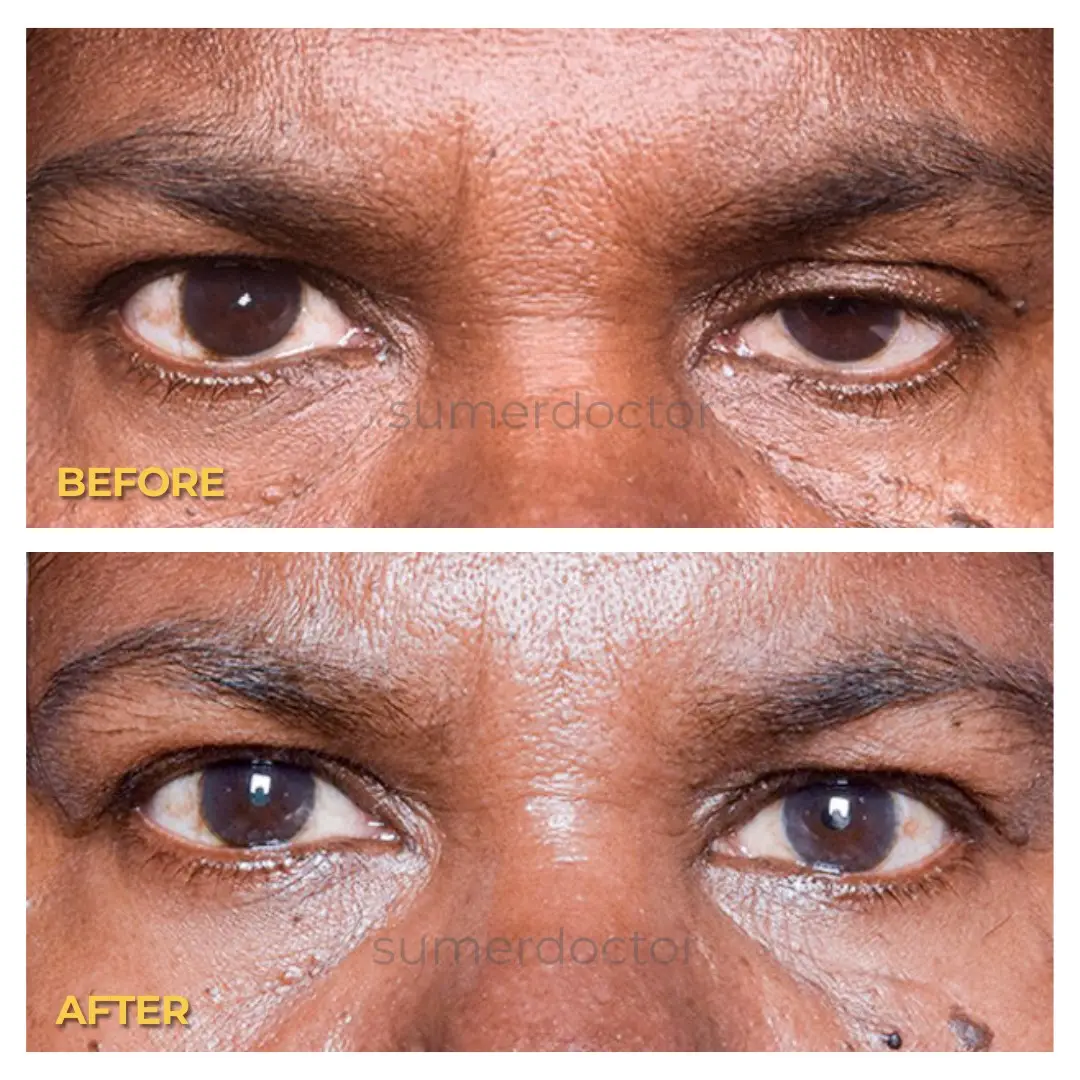
Symptoms of Droopy Eyelids
Common signs and symptoms of ptosis include:
- Noticeable drooping of one or both upper eyelids
- Difficulty keeping the eyes open
- Reduced upper field of vision
- Frequent eyebrow raising to compensate for the droopy lid
- Tilting the head backward to see clearly
- Eye strain and forehead fatigue
- Asymmetrical appearance of the eyes
If these signs sound familiar and are not settling on their own, it is worth having an oculoplastic surgeon, an eye specialist who focuses on the eyelids and the area around the eyes, take a proper look.
Causes of Ptosis
A droopy eyelid is a sign rather than a single disease, and the reason behind it can differ from one person to the next, depending on age and overall health. These are the most common droopy eyelid causes.
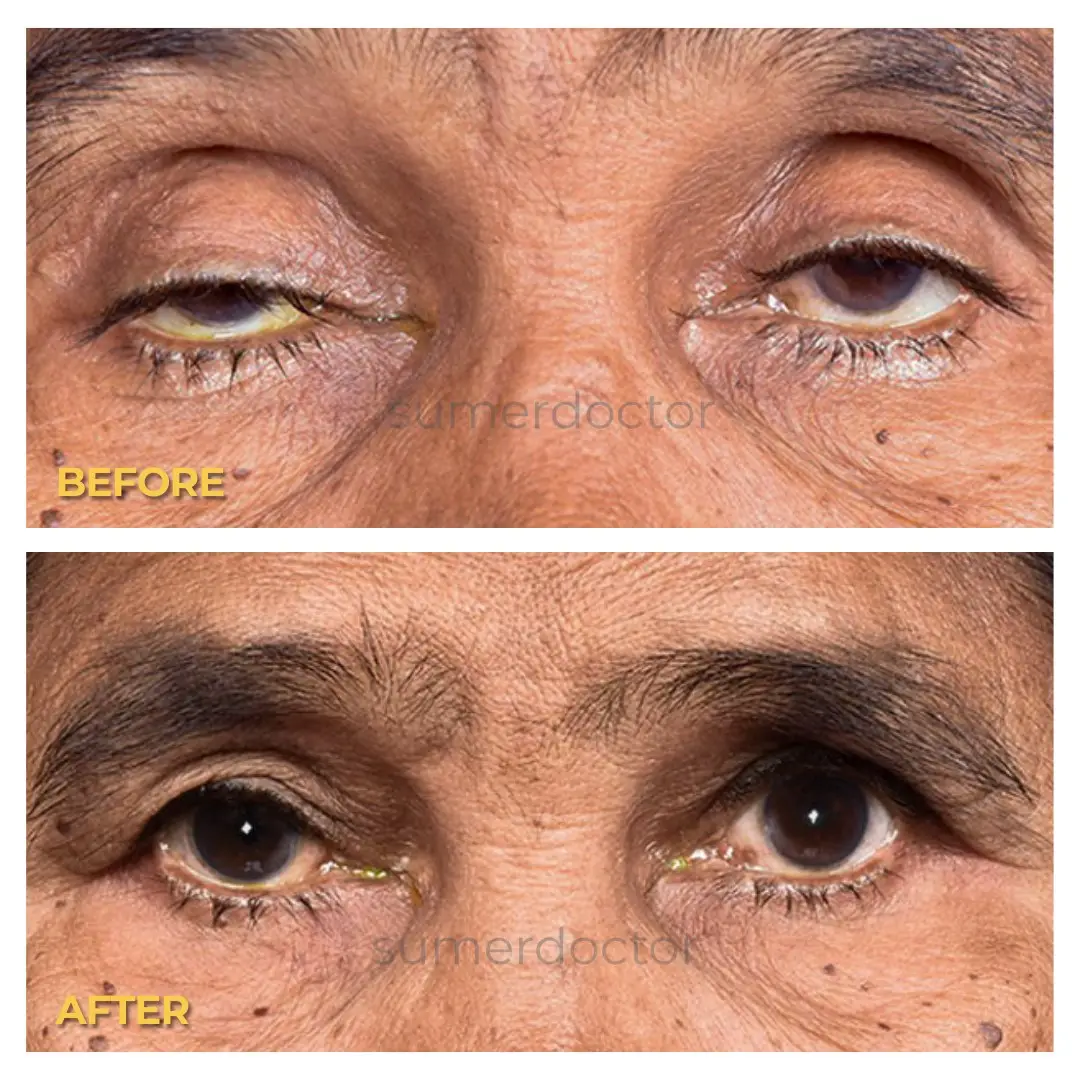
1. Age-Related (Aponeurotic) Ptosis
This is the most common reason for droopy eyelids in adults. A thin tendon connects the lifting muscle to the eyelid, and over the years it can stretch and loosen, much like the elastic in a waistband that has been worn and washed many times. As it loosens, the eyelid is simply no longer held up as crisply as before.
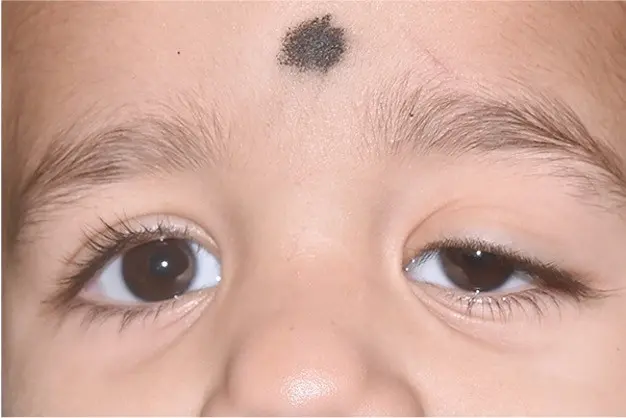
2. Congenital Ptosis
Some children are born with an eyelid-lifting muscle that did not develop fully, so the lid sits low from the very start. Treating this early matters, because in a young child an eyelid that blocks vision can hold back the normal development of eyesight if it is left unaddressed.
3. Neurological Conditions
Certain nerve-related disorders can lead to eyelid drooping, including:
- Myasthenia gravis
- Third cranial nerve palsy
- Horner’s syndrome
4. Trauma or Injury
A knock, cut, or deep bruise to the eye area can damage the delicate muscle and tissues that raise the eyelid, leaving it drooping afterwards.
How Is Ptosis Diagnosed?
Diagnosing a droopy eyelid is hands-on and completely painless. During a detailed eye examination, your specialist works out how far the lid is drooping and why, by checking things such as:
- Eyelid position and symmetry
- Levator muscle function
- Visual acuity
- Peripheral vision
- Eye movements and neurological status
- Medical and surgical history
If there is any hint that a nerve or muscle condition is driving the droop, a few extra tests may be suggested to get to the bottom of it.
Treatment Options for Droopy Eyelids
There is no one-size-fits-all answer. The right droopy eyelid treatment depends on what is causing the droop, how heavy it is, and whether it is affecting your vision.
Observation
If the droop is slight and is not getting in the way of your sight, sometimes the best approach is simply to keep an eye on it with periodic check-ups, with no surgery needed.
Medical Management
When the droop is a side effect of another medical condition, such as a nerve or muscle disorder such as myasthenia gravis, treating that underlying problem can itself help the eyelid lift better.
Ptosis Surgery
When the droop is more noticeable, and especially when it is blocking your vision, ptosis surgery is the most reliable and long-lasting solution. The goal is straightforward: to lift the eyelid back to a natural, comfortable height that suits your face.
Common surgical procedures include:
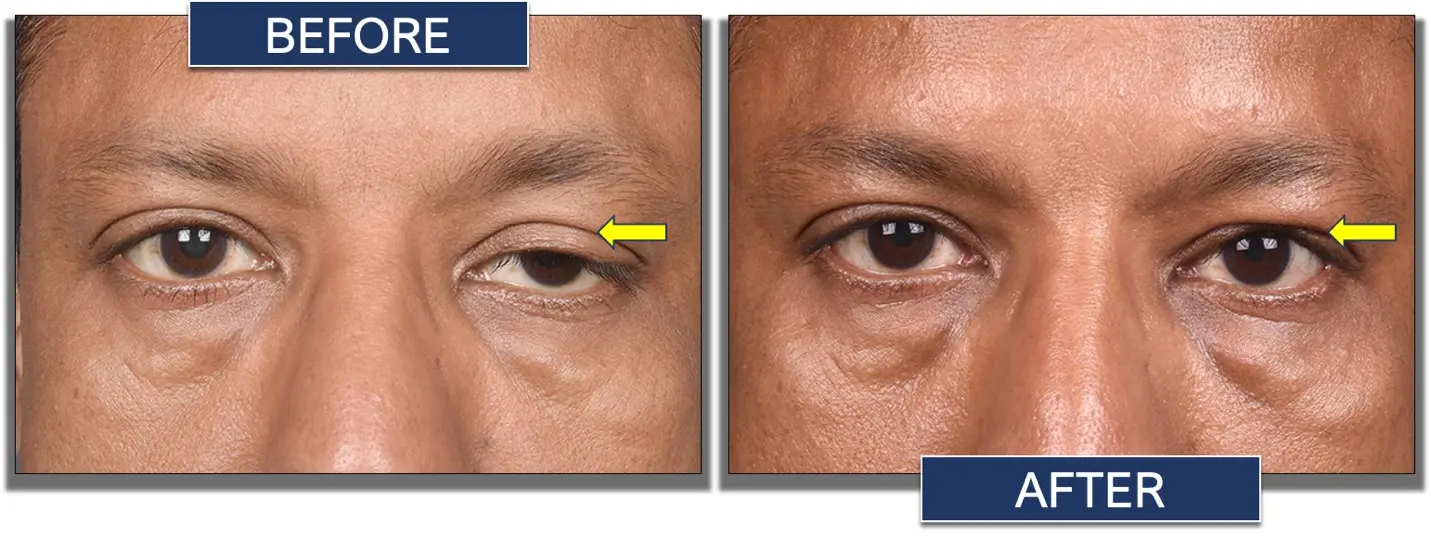
Levator Advancement Surgery
Think of this as re-tightening that stretched waistband. The surgeon gently tightens or re-anchors the tendon of the eyelid-lifting muscle so the lid sits higher and more naturally. It is the procedure most often used for adults whose droop has come on with age.
Levator Resection
When the lifting muscle is a little weaker, a small portion of it is shortened so it can pull the eyelid up more effectively, rather like taking up a hem to raise it.
Frontalis Sling Procedure
When the eyelid’s own lifting muscle is very weak, as it often is in children with congenital ptosis, a soft silicon/ethibond/fascia lata sling is used to link the eyelid to the strong forehead muscle. After this, a gentle lift of the eyebrow also raises the lid, so the forehead effectively lends a hand to a muscle that cannot manage the job on its own.
Frontalis Flap procedure
Here the frontalis muscle itself is advanced and used as a surrogate sling which can help directly utilize its power and function to lift the eyelid up bypassing the dystrophic or weaker levator muscle.
What to Expect After Ptosis Surgery
Most ptosis surgery is done as day-care, which means you come in and return home the same day. Adults are usually kept comfortable with local anaesthesia with or without light sedation, while children typically have the procedure under general anaesthesia, so the exact approach depends on age and the individual situation.
Recovery generally includes:
- Mild swelling and bruising for one to two weeks
- Use of prescribed eye drops or ointments
- Temporary discomfort or tightness
- Follow-up visits to monitor healing
Once everything has settled, most people enjoy both clearer vision and a brighter, more rested look, as though they are no longer straining to keep their eyes open.
Benefits of Ptosis Treatment
Timely treatment of droopy eyelids offers several advantages:
- Improved visual field
- Enhanced facial symmetry
- Reduced eye strain and forehead fatigue
- Better confidence and self-esteem
- Prevention of vision-related complications in children
When Should You See a Specialist?
You should seek medical attention if:
- The eyelid drooping develops suddenly
- Ptosis interferes with daily activities or vision
- A child has a droopy eyelid from birth
- The condition worsens over time
- Ptosis is associated with double vision, headache, or muscle weakness
Getting checked promptly means any serious underlying cause is picked up early, and that you receive the treatment that genuinely fits your situation.
Consult Dr. Sumer Doctor – Trusted Oculoplastic Surgeon in Mumbai
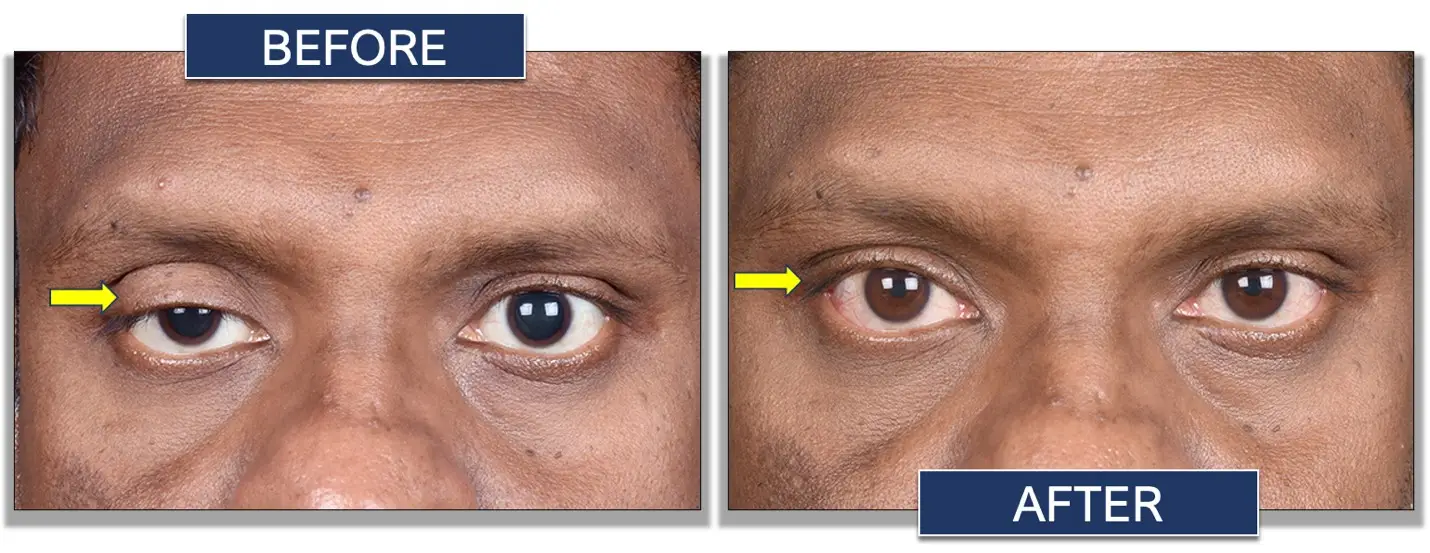
Dr. Sumer Doctor is a highly experienced Oculoplastic Surgeon in Mumbai, specializing in the diagnosis and treatment of droopy eyelids (ptosis) and other eyelid disorders. With advanced expertise in ptosis surgery, eyelid reconstruction, cosmetic eyelid procedures, and orbital surgeries, he provides individualized treatment plans focused on both functional vision improvement and aesthetic outcomes.
Patients from Mumbai and across India seek his care for comprehensive evaluation, modern surgical techniques, and compassionate guidance throughout their treatment journey. If you are experiencing droopy eyelids that affect your appearance or vision, consulting Dr. Sumer Doctor, a trusted ptosis surgery specialist in Mumbai, can help you explore the most effective treatment options tailored to your needs.
Frequently Asked Questions (FAQs)
What causes droopy eyelids (ptosis)?
Ptosis can occur due to aging, congenital muscle weakness, nerve disorders, eye injuries, or previous eye surgeries.
Is ptosis surgery necessary for everyone?
No. Surgery is recommended when droopy eyelids affect vision, cause eye strain, or create significant cosmetic concerns.
How long does it take to recover from ptosis surgery?
Most patients recover within 1–2 weeks, although complete healing and final results may take a few months.
Can children undergo ptosis treatment?
Yes. Children with congenital ptosis may require early treatment, especially if the condition interferes with normal vision development.
Is ptosis surgery permanent?
Ptosis surgery provides long-lasting results, but natural aging changes or certain medical conditions may occasionally lead to recurrence over time.