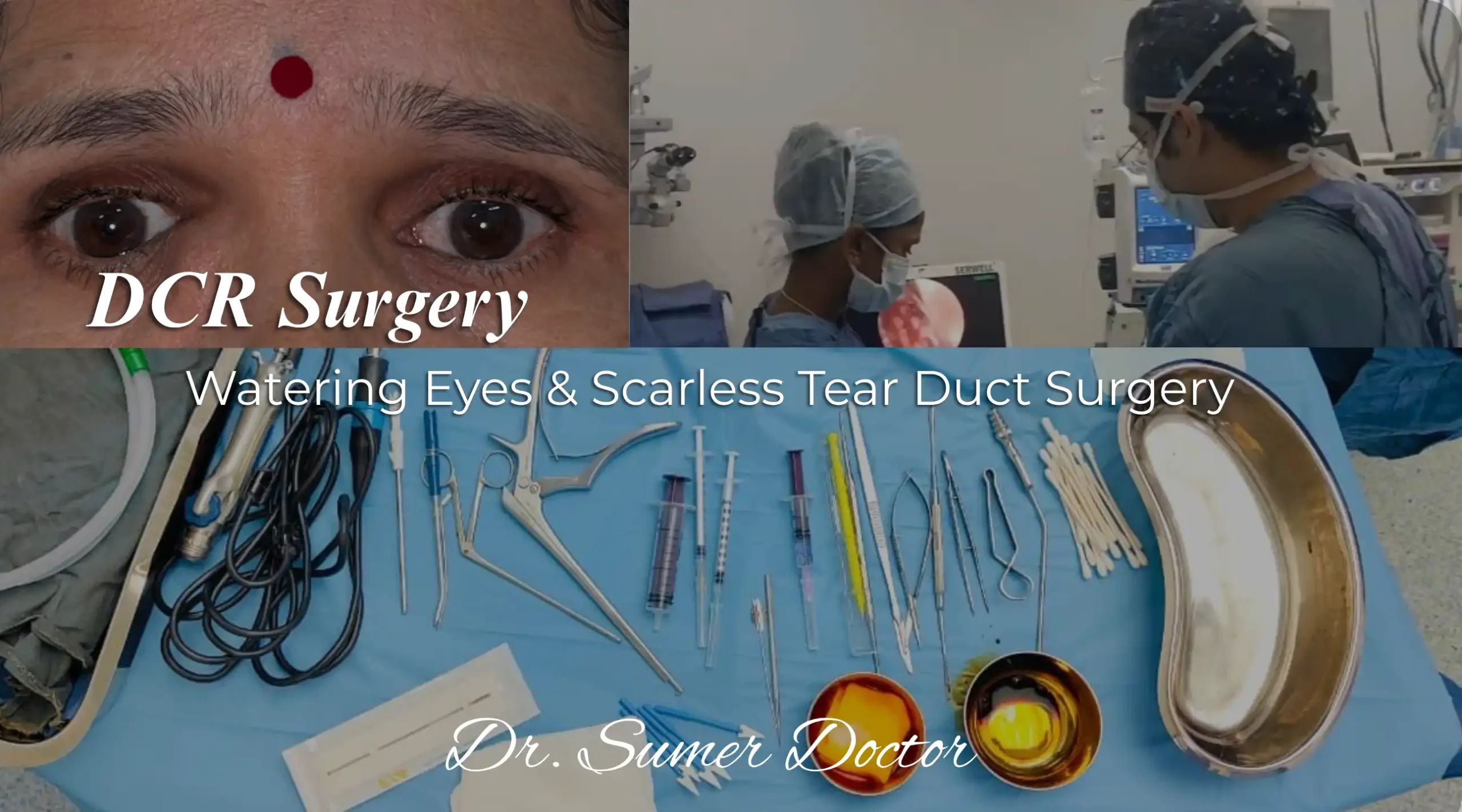
Watering Eyes & Scarless Tear Duct Surgery (DCR) in Mumbai

https://drsumerdoctor.com/wp-content/uploads/2026/08/Banner-1-1-scaled.png

Introduction

A constantly watering eye is more than a nuisance – tears spilling down the cheek, blurred vision, sticky discharge, and repeated infections can wear you down. The most common cause is a blocked tear duct, and the definitive treatment is a DCR (dacryocystorhinostomy) – a time tested operation that creates a new drainage pathway for tears.


Dr Sumer Doctor is an oculoplastic and lacrimal surgeon in Mumbai who performs scarless (endoscopic) DCR done entirely through the nose, with no cut on the face and no visible scar, as well as conventional DCR, choosing the right approach for each patient.

What Tests Are Required?

  • Examine the eyelids, tear openings, and eye surface

  • Perform syringing – gently flushing the tear ducts with a little fluid to locate exactly where, and whether, there is a blockage.

  • Imaging (CT scan) in selected cases

Why Is My Eye Watering?

Too many tears: Sometimes the eye makes more tears than it can drain. A dry, irritated eye is one of the commonest triggers – the dry surface floods itself with reflex tears. Here the answer is in treating the dry eye.
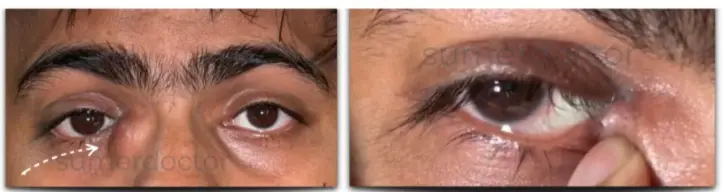
Poor drainage: The tears are normal, but the “water pipe” that carries them away — from the inner corner of the eye, down into the nose is blocked. This is the situation a DCR is designed to fix.
In babies: Many babies are born with a membrane still closing the lower end of the tear duct (congenital nasolacrimal duct obstruction). This causes watering and sticky discharge.
The reassuring news: most clear on their own within the first year, helped by a simple tear-sac massage technique. If the blockage persists beyond about a year, a quick probing procedure opens the duct.

What is DCR, and What Does “Scarless” Really Mean?

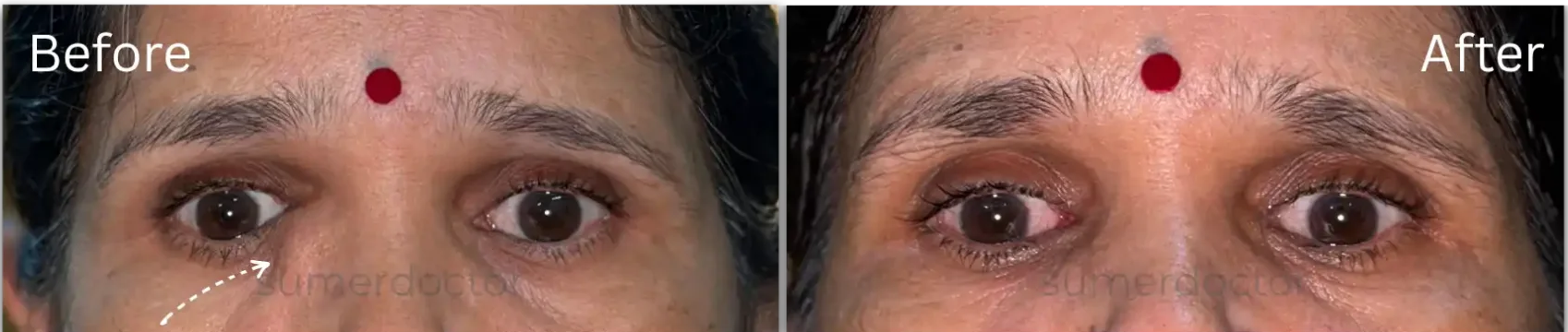
A DCR creates a new passage for tears to drain from the tear sac directly into the nose, bypassing the blocked duct. There are two approaches to surgery:
Scarless (endoscopic / endonasal) DCR – performed entirely through the nose using a fine endoscope, with no incision on the skin and no visible scar. Recovery tends to be quicker, and more pain-free.
External DCR – a time-tested approach through a small incision near the inner corner of the eyelid, which heals to a faint line that is easily concealed. For certain blockages it remains the best choice.
Both approaches have high success rates, and in some cases a soft silicone tube is placed temporarily to keep the new passage open, removed after one month.

What is Recovery Like?

First few days

Mild swelling at the inner corner; a little blood-tinged fluid from the nose is normal.

Nose care

You will use nasal drops or sprays for a short period

Back to routine

Most people return to work within 3-5 days

DCR Post-Surgery

Get To The Real Cause

If your eye waters constantly, or you have a sticky, infected inner corner, the first step is simply finding out why – because the right treatment depends entirely on the cause. Begin a conversation by Whatsapping +919391521982 to know more.

cta-img

Tear Duct Surgery - FAQs

No. It is done under anaesthesia and you have a mild pulling sensation during it. Afterwards there is mild discomfort, easily managed.

With scarless (endoscopic) DCR, none at all. With external DCR, only a faint line beside the nose that fades and is easily hidden.

DCR has a high success rate in experienced hands. Your specific likelihood is discussed at consultation.

Recurrence is uncommon after a well-performed DCR.

No. If watering is caused by dryness or irritation, surgery will not help. That is why the examination comes first.

Clinic Location

Well-connected and easy to reach by road, rail, and air.

Near metro station

Parking available

Accessible clinic

Get Directions